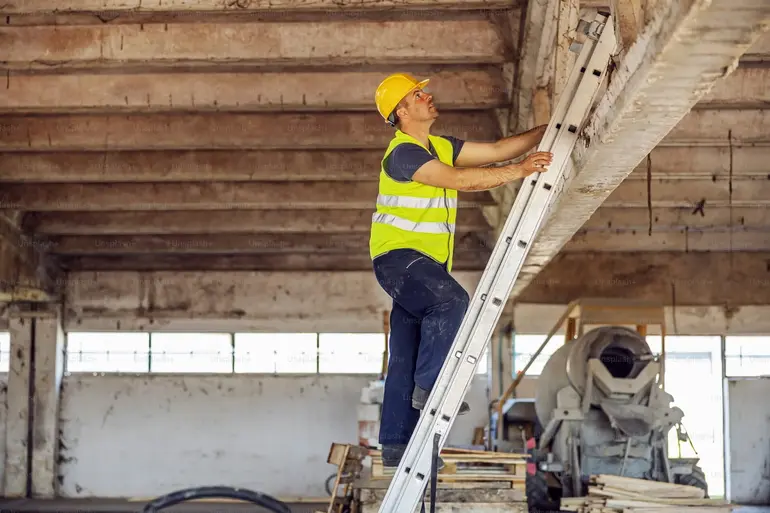
Ladders: still one of the main causes of accidents on construction sites
On construction sites, ladders are among the most frequently used items of equipment. Fast, accessible and easy to move, they often give the impression of being risk-free. Yet, year after year, falls related to their use remain among the most frequent accidents in the industry.
In many cases, it's not the equipment itself that's to blame, but rather its misuse or work habits that have become too commonplace over time.
The most common mistakes
There are a number of situations that crop up regularly on construction sites:
- using a ladder as a work platform for long periods of time;
- work without maintaining three points of support ;
- installing the ladder on unstable or uneven ground;
- riding with tools in your hands;
- go beyond the sides of the ladder to reach a remote area;
- use a damaged or loose ladder.
These gestures sometimes seem harmless, especially when a task takes "just a few minutes". However, all it takes is one wrong move to cause a serious fall.
A ladder is not scaffolding
A common mistake is to use a ladder for prolonged or multi-movement work. A ladder is primarily used to access a work area, not to replace a safe platform.
When a job requires you to work at heights for long periods of time, handle materials or perform repetitive movements, another solution should be considered:
- scaffolding ;
- lifting platform ;
- guardrails ;
- adapted work equipment.
The importance of rapid inspections
Even before use, a simple visual check can prevent several incidents:
- bar condition ;
- stability ;
- presence of cracks ;
- non-slip soles ;
- adequate locking.
A damaged or unstable ladder should never be used, even for a quick job.
Prevention is also about habits
On many construction sites, accidents occur not because of a lack of knowledge, but because certain practices become routine. The pressure of deadlines, speed of execution or the repetition of tasks can lead to dangerous shortcuts.
Reminding workers of good practices, taking safety breaks and encouraging them to take a few seconds to set up their equipment are simple but effective ways of reducing risks.
In OHS, the most frequent accidents are often those associated with gestures that we think we've mastered for a long time.